Influencer Marketing: How to Choose Creators, Set Up Deals and Measure Results
An influencer with a million followers costs as much as a small campaign, and the result often looks like a laundry detergent ad. At the eighteenth Marketing Chatter, we talked about why smaller creators pay off better, how to pick them, what to nail down in the contract and how to tell whether the partnership works.
TL;DR
- Influencer marketing is a partnership between a brand and a creator whose audience trusts them. Audience fit and credibility matter, follower count doesn’t.
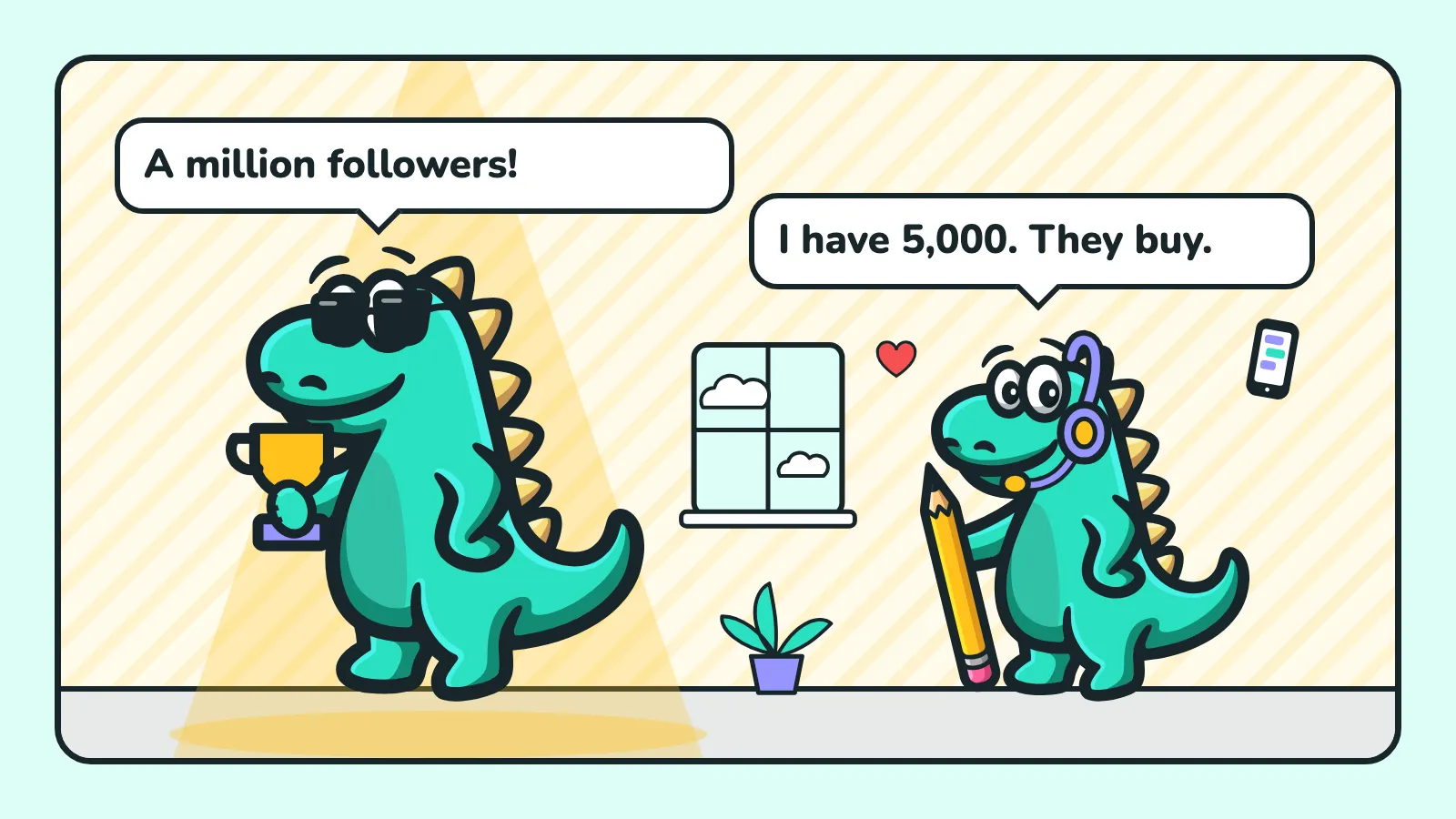
- Micro-influencers and UGC creators pay off better than big stars: they cost less, feel more natural, and in B2B even a profile with 5,000 followers is worth a lot when they’re the right people.
- Without a contract and checkpoints, the partnership falls apart: the contract covers the number of deliverables, disclosure, licensing and an approval process from script to finished video.
Why do smaller influencers pay off better?
Influencer marketing is a partnership between a brand and a content creator whose audience trusts them. The brand isn’t just buying reach, it’s buying that trust. That’s why it matters whether the creator’s audience is your target audience, not how many followers they have.
Big influencers tend to be a pain. Once we were looking at a star for a client who asked for about €10,000 for 1 short YouTube video. And even when a big deal goes through, it often feels fake: one day the creator sells laundry detergent, the next an energy drink, and the day after your product. Micro-influencers with a few thousand followers work much better for us, especially when they have a genuine connection to the brand.
What counts as “micro” depends on the market. In B2C, you count in tens of thousands. In B2B, even a profile with 5,000 followers can be a gold mine if they’re the owners of the manufacturing companies you’re targeting.
Influencer or UGC creator?
One participant at the Chatter, an online furniture store, doesn’t work with influencers in the classic sense at all. It works with UGC (user-generated content) creators who shoot videos for the brand’s ads. They don’t have to publish them on their own profiles.
- Barter instead of a fee: a creator gets a sofa and shoots 4–5 videos for it. The company caps the value at €150–200 per video.
- Not every video works: 1–2 good videos out of 5 is enough. The ad numbers decide which ones they are, not the team’s taste.
- After a year, creators reach out on their own: the partnerships are visible on social media, so the company no longer has to approach anyone.
UGC gives the brand control: the content goes on its own channels, passes its approval and can be used in ads. Just watch the licensing. Some creators now want a monthly fee for every month a video is used. Negotiate a one-off license with no time limit instead.
How do you choose the right influencer?
When I pick creators for clients, I use a scoring table. I score every candidate on 5 criteria and compare them side by side:
| Criterion | What I look at |
|---|---|
| Audience relevance | How closely their audience matches my target audience. |
| Credibility | What they made before, which brands they worked with, whether they’ve had a scandal and whether they’re a real person. |
| Engagement | Whether people comment and react. Comments and real conversation weigh more than likes. |
| Price | What it costs and what I get for it. |
| Brand fit | Whether their style and type of content suits my brand. |
Verify the creator’s numbers. Ask for screenshots of their analytics, because only they can see views and demographics. Then check for yourself who comments on their posts. Participants at the Chatter pointed out that creators often comment on each other’s posts and bots supply part of the reactions.
What belongs in an influencer contract?
Always sign a contract, even for a barter. The store from the Chatter started without one and didn’t receive the agreed deliverables on its very first partnership. A contract protects both sides and covers mainly this:
- Number and type of deliverables: how many videos, posts or stories, in what format and by when.
- Disclosure: both paid and barter content must be labeled as advertising. If the creator doesn’t label it, it falls on the brand too.
- Content rules: what must not appear (swearing, false claims, mentions of competitors).
- Exclusivity: how long after the campaign the creator can’t work with your competitors.
- License: where and for how long you may use the content.
- Approval process: a script first, then a storyboard, and only then filming.
- A real person: more and more, that the creator films the content themselves, not their AI clone.
Add a brief to the contract, a document describing what the content should look like: dimensions, export quality, safe zones for captions and examples of videos that worked. Then check the final version before it goes live. The well-known 2016 case shows why: model Naomi Campbell published a post for Adidas together with the instructions the brand had sent her, copied straight into the caption.
Even checkpoints don’t guarantee you’ll get it right the first time. We once spent 2 months fine-tuning a single video with an influencer. What helps most is meeting in person at the start. When you sit down with a creator as people, it’s easier to agree on content that stays theirs and still fits your brand.
How do you measure an influencer campaign?
Brand awareness is always harder to measure than actual sales, that’s just how the top of the funnel works. But you can measure more than most companies think:
- Reach and impressions: how many people actually saw the content.
- Engagement: comments, shares, saves. For video also the hook rate, meaning how many people stay past the first seconds. For the store from the Chatter, that’s the main metric.
- Website traffic: through a separate UTM link for each creator, then by source and medium in Google Analytics.
- Leads and sales: through unique discount codes or affiliate tracking that shows which partner brought in which customer.
- Cost per result: just like in PPC, you calculate the cost per click, lead or purchase.
- Sentiment and share of voice: how people talk about the brand (social listening) and how often they search for you compared with competitors, for example in Google Trends.
Discount codes don’t suit every brand. For more expensive purchases that people think over for 2 weeks or longer, or for a brand that doesn’t want to compete on price, they can do more harm than good. There, UTM links and careful measurement of the whole customer journey pay off.
Will AI replace influencers?
AI influencers already exist and the tools get better every month. The upsides are obvious: almost zero cost and full control, with nobody arguing with you over the script. But when buying, people mostly trust other people: references, reviews and recommendations. So on conversions, AI influencers still lose.
One participant summed it up in the chat: an influencer may not tell the truth, but a brand shouldn’t lie. An AI character claiming it “uses the product every day” is deceiving customers. An undisclosed AI influencer is a reputational time bomb for a brand, and it will go off sooner or later.
AI clones of real creators are a different story. They’re built on the creator’s actual personality, voice and style, and they save the creator time. Just make clear in the contract whether a clone is fine with you or you want the real person.
How do you get started with influencer marketing?
- Start with small creators: 3–5 micro-influencers or UGC creators on a smaller brief, and watch who delivers results. Keep working with those long term.
- Prepare the contract and brief in advance: write them once, then just adjust them for each partnership.
- Give every creator their own UTM link: otherwise you won’t know who brought you what.
Plan influencer content together with the rest of your content. In Contesaur, every piece of content goes through an approval workflow from idea to publication, so you approve creators’ scripts and finished videos in one place and see in the content calendar when everything goes out.
Most common influencer marketing mistakes
- Choosing by follower count: a big number says nothing about whether they’re your customers.
- Working without a contract: deliverables don’t arrive, or arrive without disclosure.
- No check before publishing: mistakes you can’t take back.
- One-off posts: a long-term partnership feels more credible than a single burst.
- Measuring only likes: without UTM links and codes, you don’t know whether the campaign sold anything.
Wrap-up
Influencer marketing works when it’s built on trust, and you can’t buy trust with followers. Pick a creator your customers trust, set up the partnership in a contract and measure from day one. And before you sign a star with a million fans, try 5 smaller creators. Being the biggest didn’t save the T. rex either.
Marketing Chatter is a free online meetup held in Czech. See the upcoming dates.
FAQ
How much does an influencer partnership cost?
In the Czech market, smaller creators charge roughly €150 to €200 per video, and a product barter is often possible. Big influencers ask for tens of thousands of euros for a small campaign. Prices in larger markets are higher.
Does an influencer have to disclose the partnership?
Yes. Both paid and barter content must be labeled as advertising, otherwise both the creator and the brand are at risk. Put the disclosure requirement straight into the contract.
What’s the difference between an influencer and a UGC creator?
An influencer publishes content on their own profile and the brand pays for their reach and trust. A UGC creator makes content for the brand, which publishes it on its own channels or uses it in ads. The creator’s reach doesn’t matter, you pay for the content.
Is an AI influencer worth it?
It’s cheap and you can shape it exactly as you like. But when buying, people mostly trust other people, so it still loses on conversions. And if a brand doesn’t disclose an AI influencer and it comes out, the brand loses trust.