Customer Journey Mapping: How to Map Your Customer's Path Without Getting Lost
Do you know which path your customers take before they buy from you, and what bothers them along the way? If not, you’re creating content blindly and hoping it reaches the right person at the right moment. Based on the sixth Marketing Chatter, here’s how to map the customer journey without the theory overload.
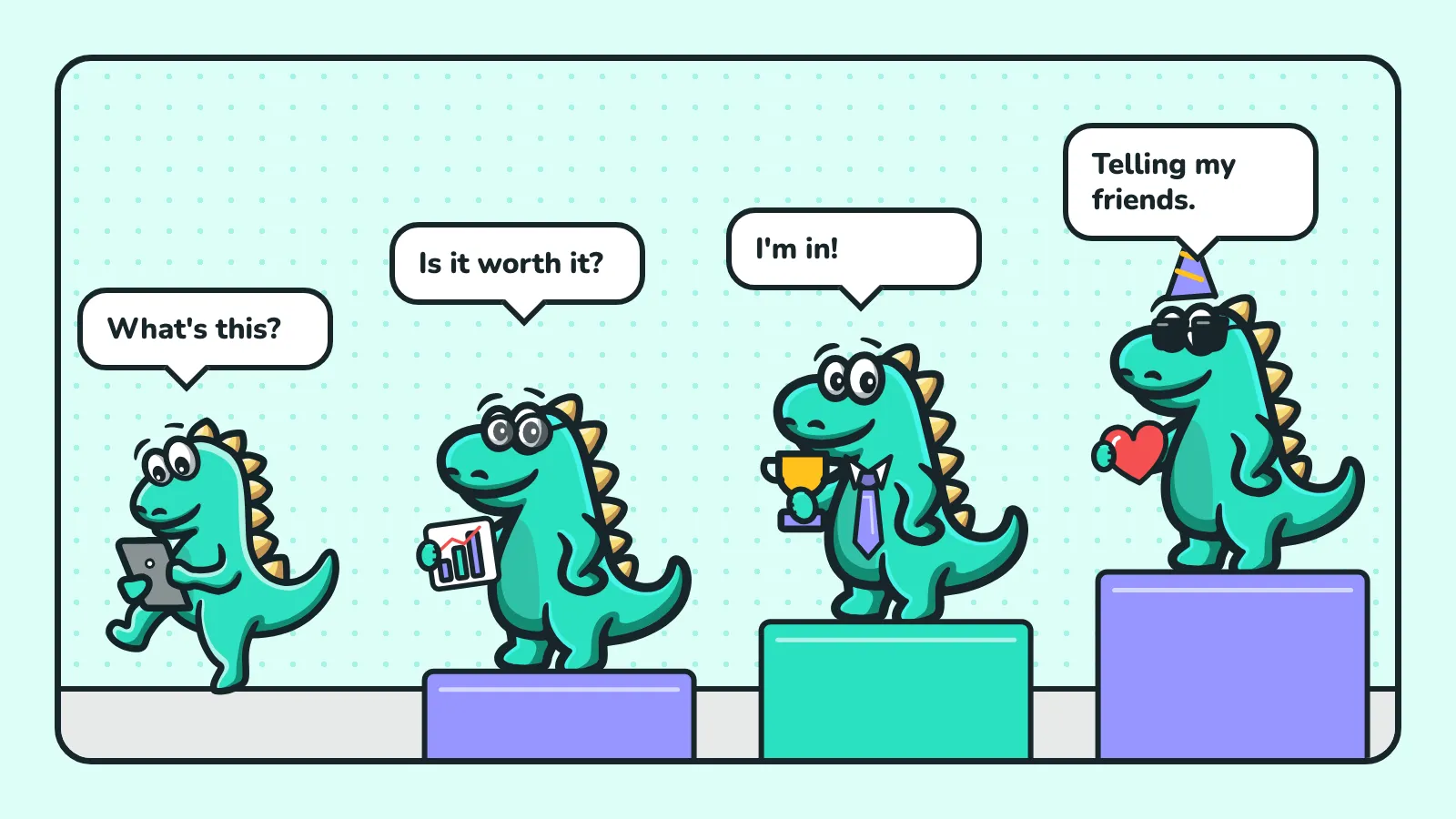
TL;DR
- A customer journey is a map of every step and touchpoint with your brand that a customer goes through, from first hearing about you to buying, getting support and buying again.
- Build the map on real data and customer conversations, not guesswork. Otherwise it’s just a pretty picture.
- The map only works when sales and support help build it, not just marketing, and when you plan content for every stage based on it.
Why should you care about the customer journey?
A customer journey is a map of every step and touchpoint a customer goes through, from first meeting your brand to buying and getting support afterwards. If you do content marketing, you need to know where your customers are and what they’re dealing with at each stage.
Skip customer journey mapping and you’re creating content blindly. You write a comparison article for someone who doesn’t yet know they have a problem. Or you send a discount to someone who would get more out of a guide on how to use the product.
How do you map the customer journey?
Customer journey mapping means understanding every step a customer takes before choosing you. Start simple and refine the map over time.
- Name the stages: awareness, consideration, decision, care. The See–Think–Do–Care model works on the same logic, and we cover it in our article on the sales funnel.
- Ask your customers how and why they found you. What were they looking for, what did they compare, and what convinced them in the end?
- Find the touchpoints, the places where people meet your brand: website, social media, reviews, newsletter, sales, support.
- For each stage, write down what the customer is dealing with, what they ask about and which content moves them forward.
What does a simple map look like in practice?
Take an accounting app for freelancers. A simplified customer journey could look like this:
| Stage | What the customer is thinking | Touchpoint | Content that helps |
|---|---|---|---|
| Awareness | “Bookkeeping eats up my evenings.” | social media, search | an article on how much time paperwork takes |
| Consideration | “Which app should I choose?” | website, reviews, comparisons | a comparison of options, a product demo |
| Decision | “Will I manage to set it up?” | pricing page, free trial | a getting-started guide, answers to common questions |
| Care | “How do I make my tax return easier?” | email, support | newsletter tips, a webinar for customers |
The table doesn’t need to be perfect. It just needs to show you which stage is missing content.
When does the customer journey start and end?
The customer journey doesn’t start with the first purchase. It starts the moment someone finds out you exist. And it definitely doesn’t end with the order. Care after the purchase matters just as much, because that’s where repeat purchases and recommendations come from.
Plenty of companies pour all their energy into winning customers and have nothing left for the care stage. Yet that’s exactly where customers decide whether to buy again and recommend you.
Common customer journey mapping mistakes
At the Chatter, we agreed on 3 main problems:
- Too little data: without real data, you’re guessing and the map is just speculation. Work with analytics, surveys and interviews.
- No teamwork: sales, marketing and support each see only part of the journey. If they don’t talk to each other, the map ends up full of gaps.
- Vague personas: if you don’t know exactly who you’re writing for, you can’t know what that person deals with at each stage. Learn how to build personas in our article on target audiences.
How do you make the customer journey smoother?
What improves the map most is teamwork. The template comes second.
- Talk to sales regularly: salespeople hear every day what bothers customers and why they end up not buying.
- Collect feedback: a short post-purchase survey or the question “How did you hear about us?” tells you more than a long meeting.
- Plan content by stage: in Contesaur, your personas, products and STDC stages live in the Company section, and you link every piece of content to them. You can see right away which stages are covered and where content is missing.
Which tools help with the customer journey?
- Content calendar: helps you plan content for each stage. Excel or Trello is enough to start.
- CRM: keeps track of a customer’s interactions with your brand. Common choices are HubSpot, Pipedrive, Raynet and Salesforce.
- Analytics: shows how people move through your website and where they drop off. Try Google Analytics, Hotjar (now part of Contentsquare) or Smartlook, which records visitor sessions.
- Surveys and feedback: if you want to dig deeper, use Typeform, Survio or Google Forms. The answers help you adjust the map to what customers actually experience.
Checklist
- The stages of the customer journey have names
- I know where customers come from, backed by data or interviews
- Every stage has at least 1 piece of content
- Sales and support helped build the map
- The map continues after the purchase, including customer care
Wrap-up
The customer journey doesn’t have to be complicated. Build it on customer data and use it to plan content for every stage. Bring in sales and support, because they see parts of the journey you can’t see from marketing. You end up with a path customers are happy to take again, not a maze where even a dinosaur would get lost.
Marketing Chatter is a free online meetup held in Czech. See the upcoming dates.
FAQ
What’s the difference between a customer journey and a sales funnel?
A sales funnel looks at the path from the company’s side: how many people move towards a purchase and where they drop off. A customer journey looks at it from the customer’s side: what they do, think and feel at each stage.
How many customer journey maps do I need?
Ideally 1 map for each main persona or customer type. Start with the most important one and add more once the first one actually helps you.
How often should I update a customer journey map?
Whenever your product, pricing or sales channels change. Otherwise, check it every 6 months against what sales and support are hearing.
Can I map the customer journey without a team?
Yes, you just need to talk to customers more. Go through emails, reviews and support requests, and call a few customers who bought recently.