Brand Communication Strategy: How to Set Up a Brand That Works
Does every channel of your brand, or your client’s, sound a little different? We tend to equate a brand with a logo and colors, but that’s only the part you can see. Here are tips from the fifth Marketing Chatter on setting up a brand communication strategy without guidelines and without months to spare.
TL;DR
- A brand communication strategy is a plan for how a brand speaks: to whom, about what, in which tone and on which channels, so people recognize it everywhere and know what to expect.
- With no guidelines in place, 15 minutes of research is enough to start, plus a 20-minute call with the decision maker.
- A brand only works when the team knows it and uses it day to day. Guidelines sitting in a drawer help nobody.
Why is a brand more than a logo and nice colors?
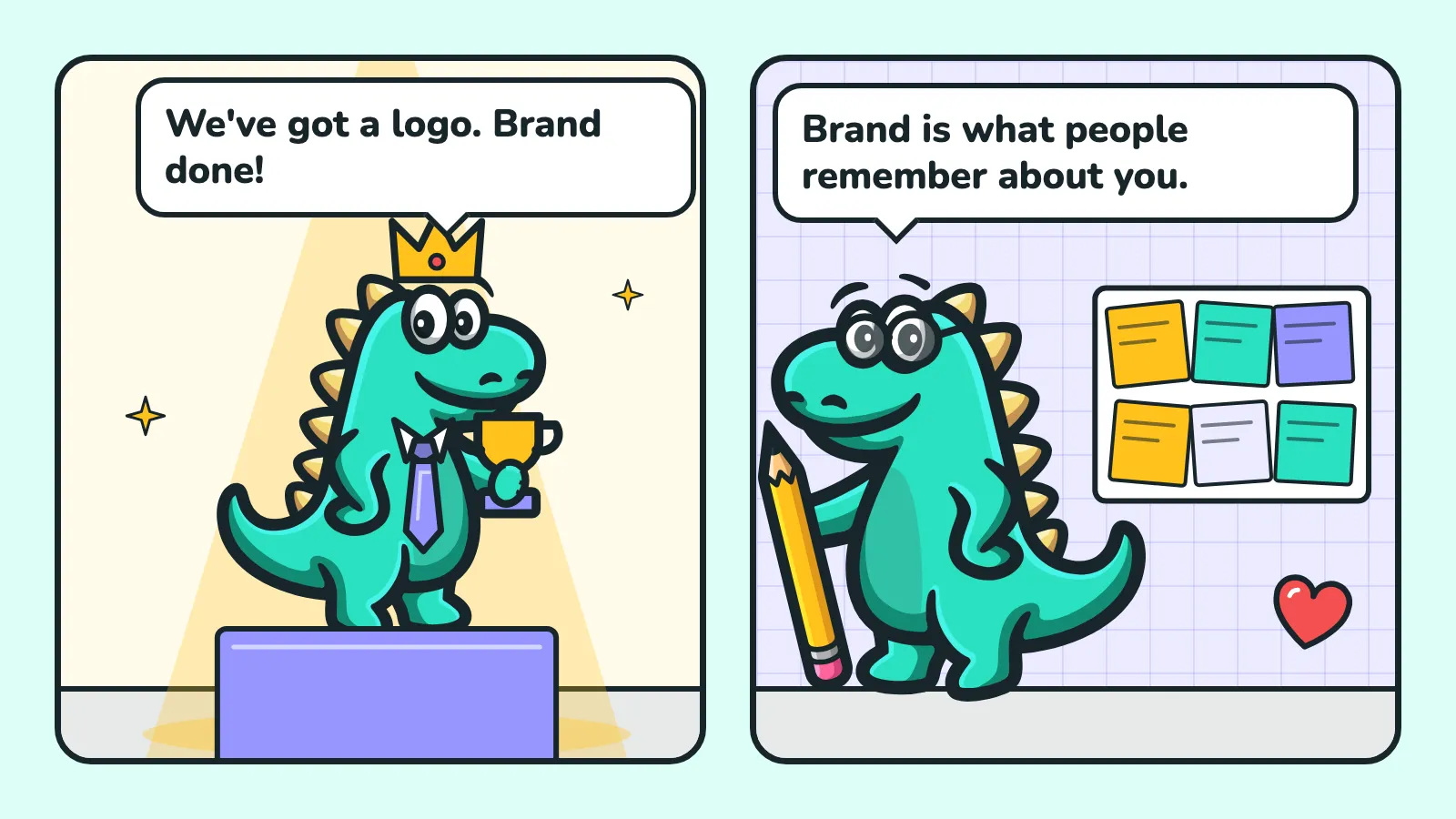
When you hear “brand,” you might picture a logo or a color palette. But a brand is how people perceive you: what they expect from you, how you speak and how you come across on every channel. The logo is just the part people can see.
A brand communication strategy is the plan for building that perception on purpose. It defines who you’re talking to, what you want to say, in which tone and where. Without it, every channel does its own thing and the brand looks like it has no face of its own.
Where do you start when there are no brand guidelines?
At the Chatter, we agreed that brand guidelines are the ideal foundation. Often, though, there aren’t any. That’s when a quick MVP (minimum viable product) helps, meaning the smallest version you can start working with:
- 15 minutes of research: Go through the client’s website and social media. That alone shows you the main tone and style.
- A 20-minute call with the decision maker: A short conversation with the person who makes the calls shows you how the brand thinks and what it cares about.
- A 1-page summary: Write down your findings and get the decision maker to sign off. Now you have a first version to build on.
Example: your research shows the website is formal and distant, while the company’s LinkedIn is casual and full of jokes. On the call, you ask which of those voices is the real one. The answer tells you more than an hour of digging through old campaigns.
One more thing from the Chatter: small companies often haven’t defined their brand at all, and big players sometimes neglect theirs too. Company size doesn’t automatically mean a strong brand.
What goes into a brand communication strategy?
A communication strategy doesn’t need 50 pages. It just has to answer 5 questions you can use to make everyday decisions:
- Target audience: Who are you talking to and what are their pain points? More in our article on target audiences and personas.
- Values and positioning: What does the brand stand for and how is it different from competitors?
- Key messages: 3–5 things people should remember about you.
- Tone of voice: How the brand speaks, which words it uses and which it avoids. Our article on tone of voice covers it in detail.
- Channels and formats: Where you speak and in what form.
How do you get your brand into all your communication?
Defining a brand is one thing. You’ll only see the difference once everyone who speaks for the brand actually uses it. What helps:
- Communication guidelines: A short, clear document on tone, style, vocabulary and visual elements.
- Sharing and workshops: Your team has to understand the brand. A document nobody reads won’t do it.
- Ongoing care: Keep reminding people of the brand and check now and then that your communication still matches it.
To keep your brand out of the drawer, it has to be at hand. In Contesaur, the Company section holds your brand, tone of voice, personas and products in one place. The whole team can see them, and the AI marketing manager uses them when suggesting content.
Who should set up the communication strategy, and when?
Ideally someone close to decision-making: an in-house marketer, an external consultant or an experienced agency. Set your strategy up sooner rather than later, because changes down the road cost more time and nerves.
When it’s high time:
- The brand is getting lost: Every channel says something different and customers don’t know what to expect.
- Communication isn’t working: You publish plenty of content, but nothing moves.
- The company is changing: A new product, market or target audience is on the way.
How can you tell your brand is working?
Brand strength is hard to measure, but it can be done. A brand is strong when customers know who you are and what to expect from you, even when they’re not on your website. Watch for:
- Customer feedback: Do people ask about the products you consistently talk about?
- Loyalty: Do customers come back regularly?
- Brand awareness: Do people mention you unprompted, for example when someone in your industry asks for a recommendation?
Common brand setup mistakes
- Brand = logo: The visuals are done, but nobody knows how the brand should speak.
- Guidelines nobody reads: The document exists, but the team doesn’t have it at hand and doesn’t use it.
- Waiting for the perfect strategy: Meanwhile, communication runs with no rules. Better to start with an MVP now and refine it as you go.
- A strategy without a decision maker: If the person who makes the calls hasn’t signed off, the first objection knocks it over.
Wrap-up
Your brand and communication strategy don’t have to be a huge project. Start with quick research and a conversation with the decision maker, then add detail as you go. A well-defined brand saves you a lot of back-and-forth and, in the end, money. For how to stay on-brand when something big happens in the world, read our article on reactive marketing. And don’t let your brand turn into a fossil nobody will recognize in a few million years.
Marketing Chatter is a free online meetup held in Czech. See the upcoming dates.
FAQ
What’s the difference between branding and marketing?
Your brand is how people perceive you and what they expect from you. Marketing is what you actually do to shape that perception and win customers.
Do freelancers and small companies need a communication strategy?
Yes, just a shorter one. Even 1 page with your target audience, key messages and tone rules saves a lot of back-and-forth.
How often should you update your communication strategy?
Whenever your product, target audience or market changes significantly. Otherwise, check once a year that it still fits.
Should brand guidelines include visual identity too?
Ideally yes, at least the basics: logo, colors and typography. If a visual style guide already exists, the communication guidelines can simply link to it.