Tone of Voice: How to Speak for Your Brand Consistently and Clearly
“That’s not how I’d put it.” Sound familiar? That one sentence is where defining a tone of voice often stalls. How do you speak for a brand so that it fits, works and isn’t boring? Here’s our recap of the seventh Marketing Chatter.
TL;DR
- A tone of voice is a set of rules for how a brand speaks: how it addresses people, which words it uses and avoids, how long its sentences are and how much humor it allows.
- It works best when marketing, product and leadership define it together in a workshop.
- It only works if the team has it at hand, with concrete example sentences, not filed away in a drawer.
Who decides how the brand speaks?
A founder says they wouldn’t put it that way. Marketing wants to sound cool, product wants to stay factual. The way out? A workshop. At the Chatter, people agreed it works best when marketing, the product team and ideally someone from leadership all take part. Your tone should reflect the brand’s personality, and you’ll name that personality best together.
Small team or freelancer? It still works. Set aside some time and define what your brand should express and how you’ll do it.
What belongs in a tone of voice?
At the Chatter, we put together a basic outline of what belongs in a tone of voice document:
- Addressing people: formal or informal, first names?
- Signing off: friendly, short, or formal?
- 5–10 key adjectives, with examples of how to read them so everyone understands them the same way
- Length and pace: straight to the point, or take your time?
- Blacklist: words you never use
- Whitelist: words you love
- Channels: tone examples for email, blog, support and website
- Your own jargon, jokes and way of speaking that make your brand yours
- How you talk about yourself: “we as a company”, “I as a brand”…
What’s the difference between tone, voice and style?
They sound similar, but they’re not the same.
- Voice: the constant core, your brand’s personality
- Tone: adapting that voice to the situation, like a cheerful newsletter vs. a serious announcement
- Style: language, formatting, sentence length and so on
Want to go deeper? Check out Nielsen Norman Group, who break tone down by formality, humor, respectfulness and enthusiasm.
What if the client has no guidelines?
This came up a lot: you start working with a client and there’s no tone of voice guide, or it’s “5 adjectives that everyone reads differently”.
What to do?
- Ask what describes the brand, and what it would never say.
- Look at how the brand speaks today: website, social media, support.
- Suggest a simple outline: formal or informal, adjectives with examples, a few concrete sentences.
- Prepare examples of how the tone sounds in different situations.
One participant shared that the Chatter on customer journeys inspired them to prepare a tone of voice workshop. That’s exactly the point: a tone of voice comes alive when the whole team understands it and uses it.
How do you work with your tone of voice long term?
A tone of voice isn’t a document you file away in a drawer. Update it regularly, add real-life examples and teach your team to use it. In Contesaur, your tone of voice lives in the Company section, so the whole team has it at hand and the AI marketing manager uses it when suggesting content.
Wrap-up
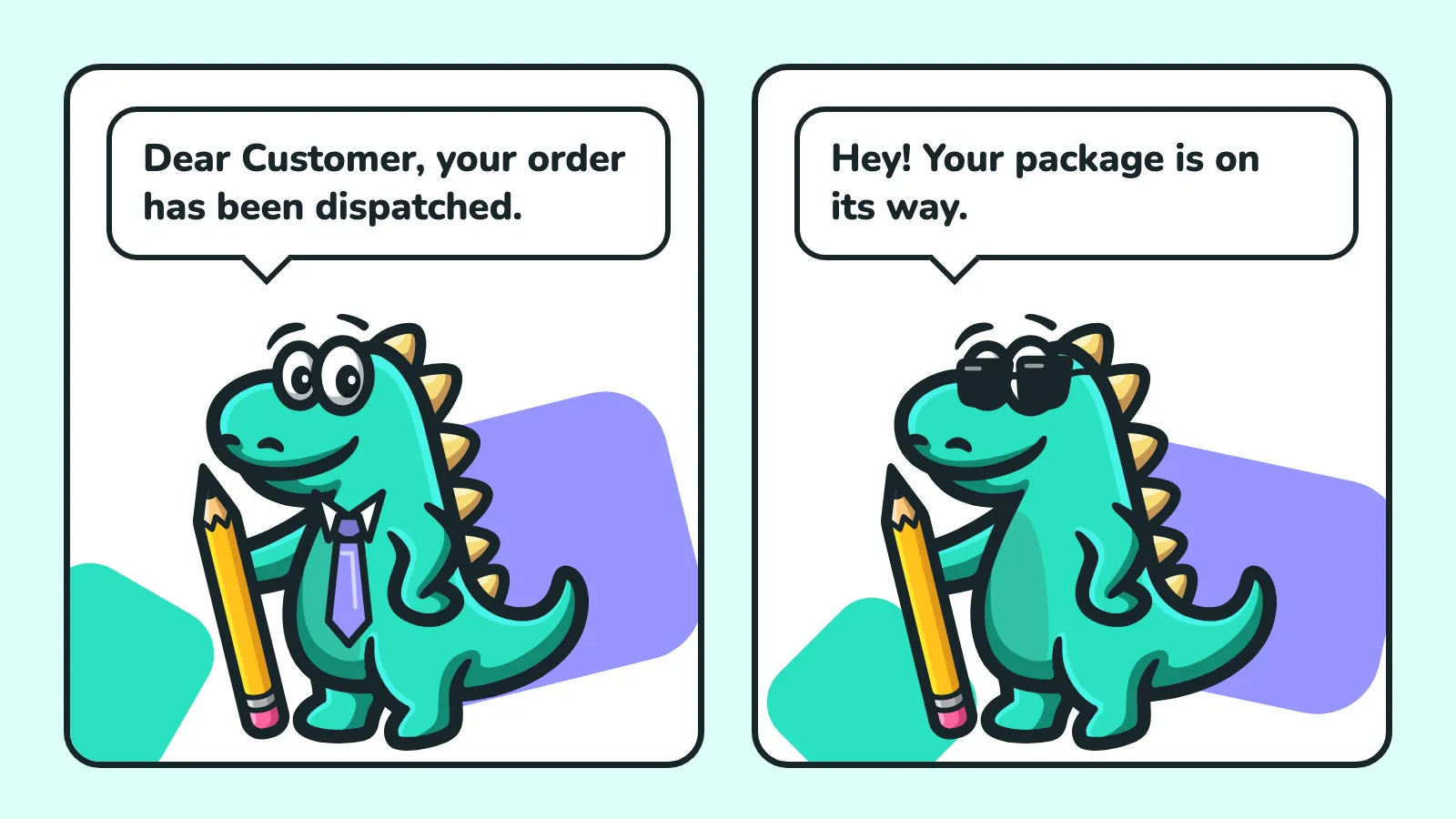
Tone of voice isn’t just for big brands. It helps you speak consistently, clearly and authentically, whether you’re a company, an agency or a freelancer. So set yours up, and stop sounding like a dinosaur that just climbed down from a 90s billboard.
Marketing Chatter is a free online meetup held in Czech. See the upcoming dates.
FAQ
How long should a tone of voice document be?
1–2 pages are enough. Concrete example sentences matter more than length, because they let the team follow the guide without further explanation.
How often should you update your tone of voice?
Whenever the brand, product or target audience changes significantly. Otherwise, review it once a year and keep adding new real-life examples along the way.
Is the tone of voice different on social media and on the website?
The brand voice stays the same, the tone adapts to the channel. You can be more relaxed on social media than on your website or in support, but it should still be clear that the same brand is speaking.
Who should own the tone of voice in a company?
Ideally 1 person in marketing who maintains the document and settles unclear cases. But everyone who writes for the brand has to use it, including support and sales.