Reactive Marketing: When to Respond to Current Events and When to Stay Quiet
A tornado, a pandemic, a war, the death of a queen. When something big happens, your customers also watch what your brand does. From the fourth Marketing Chatter, here’s how to tell whether to respond, and how to get it out while the topic is still live.
TL;DR
- Reactive marketing is communication in which a brand responds to current events in real time: an event, a trend or a crisis that matters to the brand or its customers.
- Your brand values decide whether to respond. Everyone else talking about it isn’t a reason.
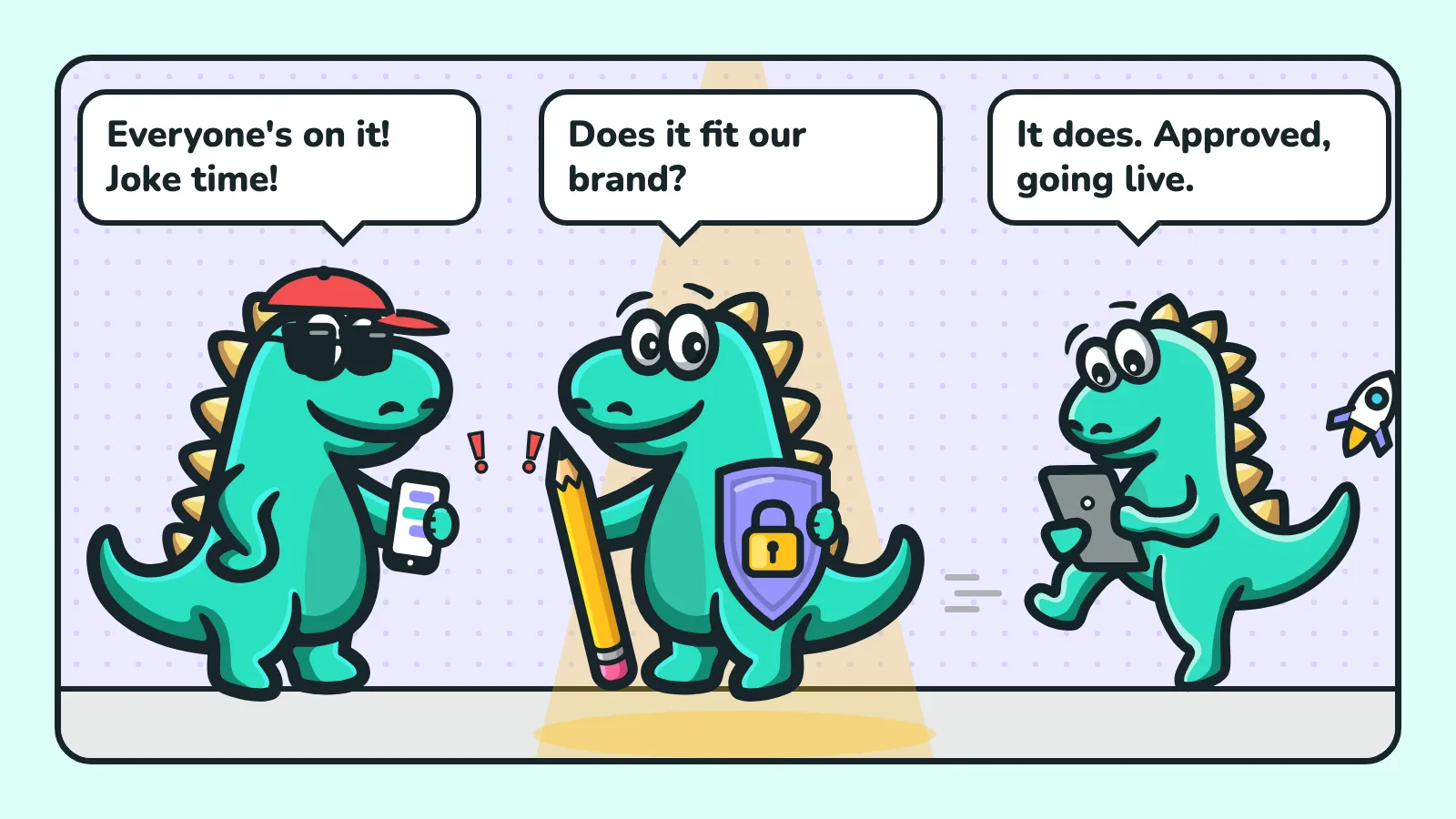
- Speed comes from process: you know in advance who drafts the response, who approves it and how soon it goes live.
What is reactive marketing and why can’t you just stay quiet?
Reactive marketing is communication in which a brand responds to current events in real time. That might be a major event, a viral trend or a crisis that affects your customers.
When something big happens, people don’t just read the news. They check your social media too. Stay silent and you can look out of touch. A response that lands shows you know what’s going on, and it brings customers a bit closer to your brand.
When should you respond, and when is silence better?
Only some situations suit reactive marketing. What decides it is how the event relates to your brand and its values.
The textbook example is Oreo. During the 2013 Super Bowl the stadium lost power, and Oreo immediately tweeted a picture of a cookie in the dark with the line “You can still dunk in the dark.” Short, funny and right on product. Pepsi showed the other end in 2017. Its ad with Kendall Jenner handing a police officer a can of Pepsi at a protest drew so much criticism that the company pulled it.
Before you jump in, ask yourself 4 questions:
- Relevance: Does the event have anything to do with your product, industry or customers?
- Values: Does your brand talk about this topic the rest of the year too, or would it be a one-off bandwagon jump?
- Tone: Can the situation take humor? With tragedies and disasters, never.
- Usefulness: Will you say something useful, or just add another logo to the crowd?
One “no” is enough to sit this one out.
Reactive marketing examples: what worked and what didn’t
We went through plenty of examples at the Chatter. The response itself teaches you less than the reason it did or didn’t work.
- Good: In January 2020, Harry and Meghan announced they were stepping back from royal duties and would split their time with Canada. IKEA Italy promptly offered them cardboard moving boxes on Instagram. Fast, self-aware and tied straight to what IKEA sells. See how it looked.
- Bad: On the 9/11 anniversary in 2013, AT&T tweeted an image of its phone photographing the memorial light beams at the World Trade Center site, captioned “Never forget.” People read it as an ad built on a tragedy. The company deleted the post and apologized. Read what happened.
How do you respond fast without the stress?
A response 3 days later isn’t a response anymore. It can only be fast and well thought out if the process exists before you need it.
- Who watches the news: 1 person follows news and industry trends and speaks up when something is happening.
- Who drafts the response: copy and visuals. Ideally someone who knows the brand’s tone of voice inside out.
- Who approves it, and by when: 1 approver, not 5. Plus an agreed deadline, say end of day.
- Red lines: topics the brand never comments on, written down in advance.
Approvals slow things down more than anything else. In Contesaur, your content calendar and approvals live in one place, so a quick response doesn’t sit waiting for feedback scattered across emails and chats. And once your tone of voice is written down, the copy comes together much faster.
Common reactive marketing mistakes
- Advertising on a tragedy: A product next to a disaster looks exploitative, even if that’s not what you meant.
- Irrelevant responses: You jump on a trend that has nothing to do with you, and people can’t see why.
- Late responses: A joke about something everyone has already moved on from falls flat.
- Approval loops: By the time 5 people have weighed in on the copy, the moment is gone.
- No red lines: Without them, you decide whether to respond under pressure and on gut feeling.
Reactive communication in a crisis: what did Zelensky show?
Reactive communication isn’t only about jokes. Ukrainian President Volodymyr Zelensky showed what it looks like in a crisis. A day after Russia’s full-scale invasion began in February 2022, rumors spread that he had fled Kyiv. That evening he stood on the street outside the presidential office with his closest aides, recorded a plain phone video and said they were all still there.
In a crisis, authenticity and speed beat polished production. No studio, no agency. Just a clear message at the moment people needed to hear it. Companies work the same way: when something happens, speak quickly and truthfully, in plain words. How a brand should speak in the long run is covered in our article on brand communication strategy.
Wrap-up
Reactive marketing pays off when you know when to use it. Respond only where it fits your brand, and set up approvals before you need them. Sometimes staying quiet is the best response. Just don’t be the dinosaur that got the meteor memo after impact.
Marketing Chatter is a free online meetup held in Czech. See the upcoming dates.
FAQ
What’s the difference between reactive marketing and crisis communication?
With reactive marketing, you respond to what’s happening around you because you choose to. Crisis communication deals with a problem that directly concerns your company, and staying silent usually isn’t an option.
Does reactive marketing work for B2B companies?
Yes, you just respond to different things: new regulations, industry news or major industry conferences. In B2B, an expert comment usually lands better than a joke.
What should you do if a response backfires?
Delete the post, apologize briefly and don’t make excuses. Then go through it with your team, find where your filter failed and adjust the rules you use to approve responses.
Should a reactive post be funny or serious?
It depends on the event and on your brand. Playful trends can take humor, tragedies never can. If you’re unsure, go serious or don’t respond at all.