Content Formats: What Works in B2B vs. B2C and How to Repurpose Content
Video is everywhere. Does that mean every other format is going extinct? At the eleventh Marketing Chatter, we talked about what works for whom and why B2B often wins with completely different formats than B2C. Also, how to get more than one use out of every piece of content.
TL;DR
- A content format is the shape your message takes on its way to people: an article, video, newsletter, podcast, post, e-book or webinar. Your goal and audience decide which one to use. Trends don’t.
- Short content grabs attention, long content builds trust. B2C relies on speed and emotion, B2B leans on explaining, case studies and newsletters.
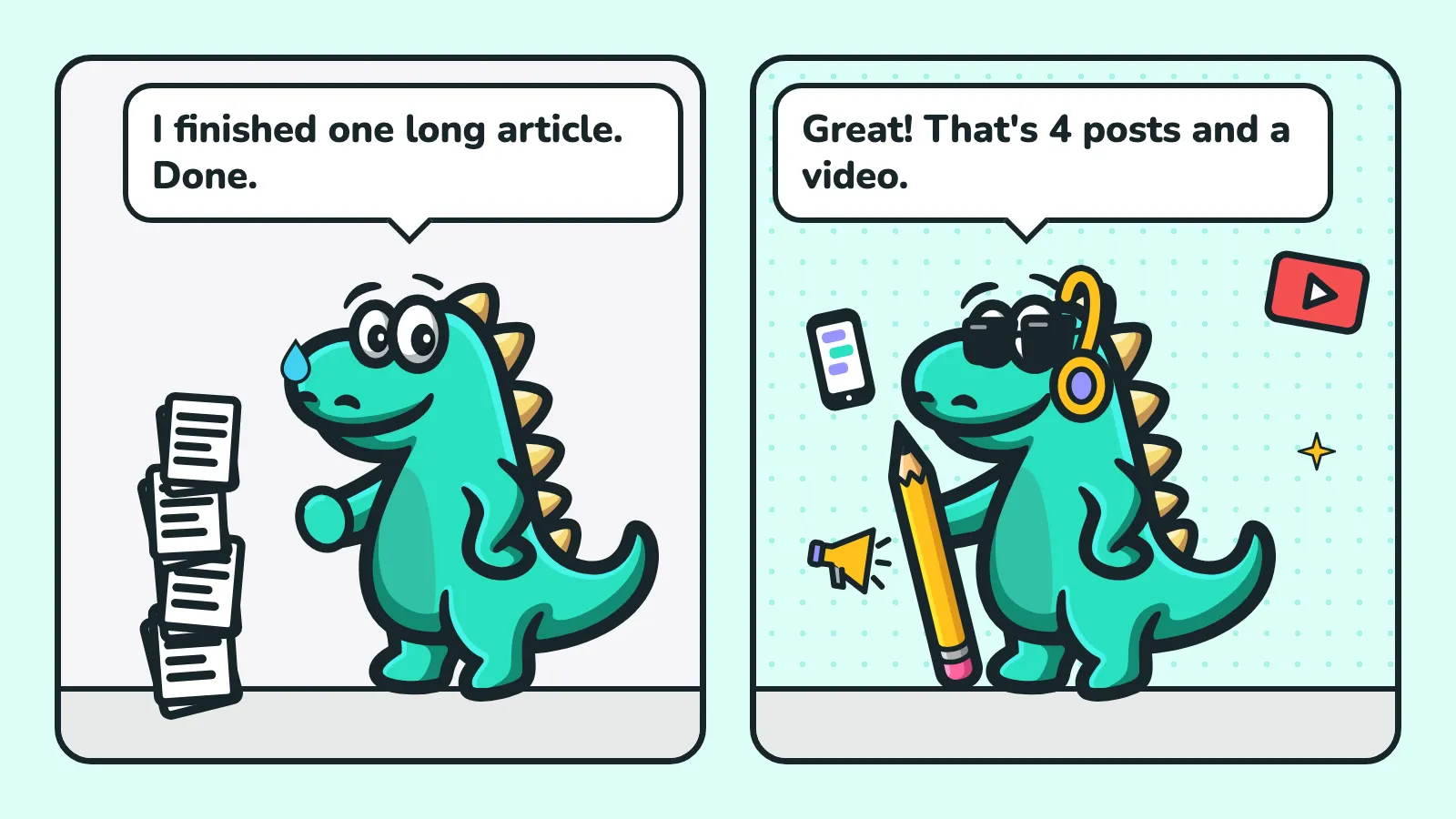
- Repurposing saves time: 1 long article can give you several posts, a quote, a short video and a newsletter tip.
How do you choose the right content format?
Content formats are the shapes your message takes on its way to people: an article, a video, a newsletter, a podcast, a social post, an e-book, a webinar or a case study. Pick the format based on your goal and audience, not on what’s trending. What gets you noticed is rarely what helps someone decide whether to pay you.
At the Chatter, people said that in B2B, long explanatory content keeps working best: articles, case studies, webinars. Newsletters too, mostly for looking after existing customers. And repurposing, because people forget key ideas or only need them later.
When should you use short vs. long content?
- Short content: social posts, teaser videos, quick tips.
- Long content: articles, e-books and video tutorials that teach people something and help them make up their mind.
Short content grabs attention, long content builds trust. So think about where in the buying journey your reader is. A short post catches them at the start. Right before buying, they want a comparison or a case study. Our article on the sales funnel shows how to spread content across the stages.
Is video really the king of formats?
Video draws the eye, no argument there. It just doesn’t make sense everywhere.
- Pros: quick to watch and carries emotion. On social media it also often reaches more people.
- Cons: costs time and money, and falls flat without a good idea. And without captions, part of your audience misses out.
A video doesn’t need a professional studio, just to be authentic and to the point. Text, audio and graphics haven’t gone anywhere either, least of all in B2B.
Which content formats work in B2B and which in B2C?
| B2C | B2B | |
|---|---|---|
| Decision-making | fast, often impulsive | longer, involves more people |
| What content relies on | speed, fun, emotion | explanation, proof, trust |
| Typical formats | short videos, Instagram, TikTok | articles, case studies, white papers, newsletters |
In B2B, content doesn’t stop at attention, it has to help the buyer justify the purchase to other people in the company. So paid ads on their own often fall short. People clicking through need somewhere to land with something to read.
Personalization matters in both worlds, as long as you use your head. “Welcome back!” works better than “You haven’t logged in for a while.” And don’t send a Mother’s Day greeting just because someone’s first name looks female in your database.
How do you repurpose content?
Repurposing content means taking 1 finished idea and using it again in a different format, channel or moment. People don’t remember most content, so repetition doesn’t annoy them, it reminds them. You also get a break from inventing new topics all the time.
Say you write an article on setting up your first newsletter. Out of it you get:
- A LinkedIn post: the 3 most common mistakes from the article
- A quote: 1 strong sentence as a graphic
- A short video: 1 tip in a minute, shot on your phone
- A newsletter tip: a paragraph linking to the full article
- An onboarding email: a link for new customers who need the topic right now
How do you work with content formats in practice?
- Start with the goal: do you want people to notice you, trust you or buy? Choose a short or a long format accordingly.
- Create content that breaks down easily: a long text with clear subheadings and lists turns into posts, a video and an email without much effort.
- Track what works: check your analytics and notice what people react to and what they ask you about. If nobody responds to a format, change it or replace it.
Plan your formats ahead, not on publishing day. Contesaur has a content calendar that shows what goes out when and where. The AI marketing manager suggests content based on your goals and personas, and a finished piece can be recycled into other formats in a few clicks.
What are the most common mistakes when choosing a format?
- Video for video’s sake: without an idea and a goal, it costs a lot and brings nothing.
- Long posts with no point: they bore people on LinkedIn. Readers want to know quickly what it’s about.
- Ads without supporting content: people arrive and find nothing to read.
- Write once, forget forever: your best ideas deserve a second and third life.
- Careless personalization: a greeting that reads like a reproach or a mistake does more harm than good.
Wrap-up
No single format rules them all. A good content mix fits your audience and your goals, and above all what you can realistically keep up. Before you shoot a video or write another article, ask yourself why and for whom. Otherwise you’ll end up like a dinosaur filming a dance video for an audience that reads white papers.
Marketing Chatter is a free online meetup held in Czech. See the upcoming dates.
FAQ
How many content formats should a small team use?
As many as it can keep up consistently over time. 2 formats done well beat 5 done in bursts. Add more once the first ones run smoothly.
Is a podcast a good format for B2B?
It can be, if your audience listens to podcasts and you have enough to talk about regularly. Interviews with experts and customers also give you material for articles and posts, so a podcast is easy to repurpose.
How often can I publish the same topic again?
Whenever you bring it in a different format, from a different angle or in a different channel. People forget most content, so a reminder at the right time usually helps them.
Should content formats be part of the strategy or just the calendar?
The strategy. The format follows from the goal, the persona and the stage of the buying journey. The calendar then only shows when and where each piece goes out.