Community Management: How to Build Your Brand Through People
People want to talk to brands, and above all they want brands to listen. But who should reply on behalf of the company, what do you do with trolls and how do you survive a wave of hate? This recap of the ninth Marketing Chatter covers hands-on experience, types of commenters and the ethical questions you’ll run into when managing a community.
TL;DR
- Community management is looking after the relationship between a brand and the people around it: replying, moderating, creating content for the community and passing feedback on inside the company.
- Your brand should be voiced by someone who knows it well, keeps its tone and has the authority to fix things.
- Trolls, haters and superfans each need a different response. Answering criticism works better than deleting it.
What is community management?
Replying to comments is only a small part of it. Community management is building a relationship between a brand and the people who talk about it. It also covers moderation, content for the community and passing feedback on inside the company. At the ninth Marketing Chatter, we talked about who should speak for a brand, how to deal with trolls and superfans, and where the ethical lines are.
Who should speak for your brand?
At the Chatter, people agreed that it matters a lot who exactly does the talking. Ideally, someone who knows the brand well, understands its tone and has the authority to fix things. That can be an in-house marketer, a support specialist or a freelancer.
Whoever it is should speak with one voice and sound like a person. If your brand’s tone isn’t written down yet, start with your tone of voice.
What are the ground rules for speaking on behalf of a brand?
- Human and consistent: reply like a person, but always like the same brand.
- Respect: for the community as a whole and for every individual in it.
- Tone: stick to your brand’s tone of voice, even in a heated discussion.
- Recurring topics: keep track of questions and themes that keep coming back.
- Feedback loop: pass what you hear on to product, support and sales.
A community is a space where the conversation goes both ways. If you only post into it, you miss what people are telling you.
What separates a great experience from a PR crisis?
At the Chatter, we heard stories of a simple question turning into a friendly relationship, and of a small communication slip growing into a PR crisis. What helps:
- Crisis scenarios: prepare a plan before a crisis hits.
- Respect, even for a sharp question: the tone of the question doesn’t set the tone of your answer.
- Personal replies over templates: don’t hide behind canned answers, people notice a personal reply.
You’ll get through a crisis if you have a plan and respond with respect.
How should you respond to trolls, haters and superfans?
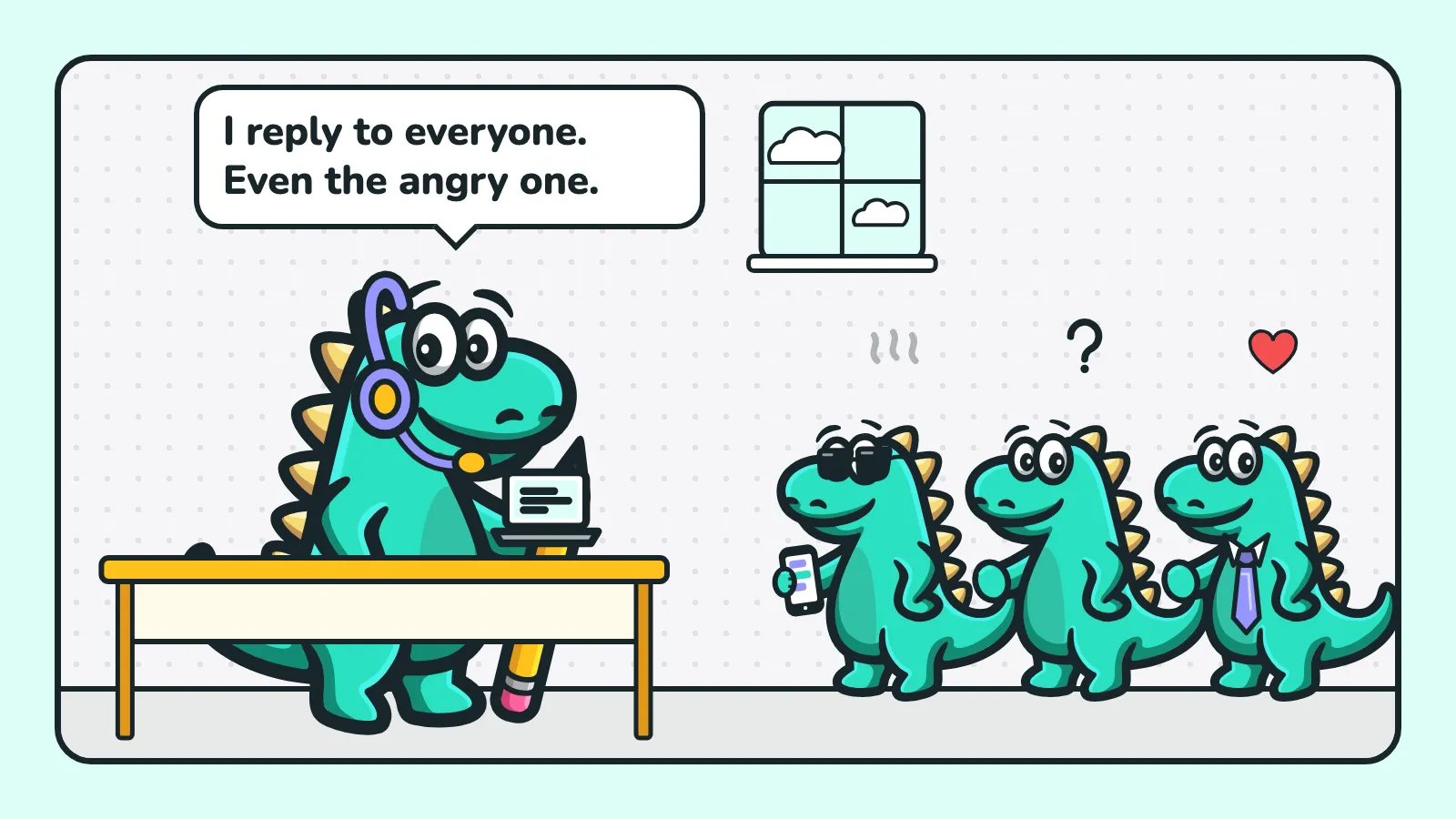
Not every comment calls for the same response. Before you reply, figure out who you’re talking to.
| Who | What they do | How to respond |
|---|---|---|
| Troll | Provokes and posts nonsense. | Ignore the nonsense. If they spread lies, gently correct the facts. A ban is the last resort. |
| Hater | Criticizes, sometimes fairly, sometimes just to attack. | Tell constructive criticism apart from pure aggression. Respond to criticism, set boundaries for aggression. |
| Superfan | Loves the brand and recommends it. | Reward them. It doesn’t have to be a gift: a thank-you, a reply or a look behind the scenes works too. |
Superfans are a treasure. Even a hater can join them, if you respond to their criticism with facts.
Example: a comment pops up under your post: “Login is broken again. Amateurs.” The wrong move is to delete it or send the template “Thank you for your feedback.” A better reply: “You’re right, login is acting up right now, sorry about that. Send us your email in a DM and we’ll check your account directly.” You admit the problem and move the fix to private messages, out of the public thread.
Should you build your own community or join an existing one?
A brand can build its own community, or join the places where people already talk about its topic. Each path has its price:
- Your own community (a forum, Discord): you’re in control, but it takes more time and content.
- An existing community (Facebook groups, Reddit, comment sections): easier to get in, but less control over the environment.
What decides it is how much time and content you can keep putting in over the long run.
What content works in a community?
Don’t write for a community the way you write for a blog. Shorter, more personal posts that invite a reaction work better. What works:
- Questions about experience: “How do you handle this?”
- Opinion posts: a clear stance people can discuss.
- Anonymous stories: situations to unpack, without names.
- Reactions to current topics: what your industry is talking about right now. More on that in our piece on reactive marketing.
In Contesaur, you can plan community posts in the content calendar next to your other channels and send them through approval before they go out.
How do you measure whether a community works?
- Engagement: reactions, comments, shares.
- Growth: how many people join, and how many stay.
- Sentiment: are reactions positive, neutral or negative?
- Business impact: referrals, loyal customers, product feedback.
Likes alone won’t tell you whether a community holds together. Track all 4 areas.
What ethical questions does community management raise?
- Is it okay to delete negative comments? If they break the rules, yes. Otherwise, it’s better to respond than to censor.
- Can you moderate a community authentically? Yes, as long as you’re not faking authenticity. People can tell when it’s calculated.
- How personal should you get? In moderation. You don’t need to know everything about everyone.
- What about employees’ accounts? Simple rules are enough. Explain rather than ban.
- Is it okay to reward people for reviews? Yes, if it’s transparent and voluntary.
In all 5 cases, openness turns out safer than control.
Common mistakes
- Canned replies: people spot copy-pasted text and feel brushed off.
- Deleting uncomfortable criticism: a deleted comment can draw more attention than the original one.
- Fake authenticity: a friendly tone without real interest is easy to see through.
- No crisis plan: without prepared scenarios, you improvise under pressure.
- Feedback stuck in the comments: nobody passes it on to product, support or sales.
Wrap-up
You can’t tick off community management with one campaign. Look after the people around your brand over the long run and they pay you back with loyalty and feedback, and with a plan in place, you’ll get through a crisis too. So look after your community, before it turns into a fossil.
Marketing Chatter is a free online meetup held in Czech. See the upcoming dates.
FAQ
What’s the difference between community management and social media management?
Social media management focuses mainly on publishing content. Community management is about the relationship with people: replies, moderation, looking after active members and passing feedback on inside the company.
Does a small company need a dedicated community manager?
It doesn’t have to be a separate role. Pick 1 person who knows the brand, has the authority to fix things and sets aside regular time for the community.
How fast should you reply to comments?
There’s no universal deadline. Set one for each channel and stick to it, so people know when to expect a reply.
What belongs in community guidelines?
What’s welcome, what isn’t, and what happens when someone breaks the rules, from hiding a comment to a ban. Keep the guidelines short and public, so you can point to them when moderating.